Summer’s heat, humidity, and increased irrigation create ideal conditions for bacterial and fungal diseases to spread in greenhouse and nursery crops, putting plant quality and profitability at risk. A proactive disease management program that combines environmental controls, sanitation, water quality management, and preventative disease protection helps growers keep crops healthy from propagation through shipment.
Summer is the most profitable season for many greenhouse and nursery growers. It’s also one of the most challenging seasons. While plants are growing rapidly, high temperatures, humidity, irrigation demands, and plant transportation work together to create ideal conditions for bacterial and fungal diseases to develop and spread.
As a commercial grower, your goal is not to simply keep plants alive. You must also maintain premium quality before (and during!) shipment to retailers and end consumers.
Let’s review the largest concerns during the summer growing season, then take a closer look at the most common and persistent summer plant diseases and how you can control them.
Common Concerns During Summer Production
First, let’s discuss the most common concerns your operation faces during the summer production season.
| Concern | Summer’s Effects | Impact on Plant Health |
| High humidity | Warm air holds moisture; dense canopies trap humidity | Encourages Botrytis, powdery mildew, downy mildew, and bacterial diseases |
| Heat stress | Prolonged high temperatures stress plants | Plants are more susceptible to disease and recover more slowly from infections |
| Frequent Irrigation | Increased water use due to heat | Splash disperse pathogens and keeps foliage wet and promotes disease spread |
| Waterborne pathogens | Warm irrigation water ideal for microbial growth | Pythium, Phytophthora, bacteria, algae, and biofilm spread through irrigation |
| Rapid plant growth | Tender, new growth is susceptible to infection | New leaves and stems offer easy entry to pathogens |
| Close plant spacing | Crops grown at maximum density at peak of the season | Limited airflow increases humidity and allows diseases to spread |
| Storms and wind | Summer weather causes mechanical damage on outdoor crops | Wounds from damage provide entry for pathogens |
| Insect activity | Insect populations increase during warm weather | Insects create wounds and can transmit diseases between plants |
| Propagation success | Warm, humid propagation houses favor rooting | Propagation conditions also favor damping-off, Botrytis, and bacterial soft rot |
| Shipping stress | Excess heat during transport | Stress causes latent infections to become visible once at retailers |
Common Summer Diseases for Greenhouse Plants
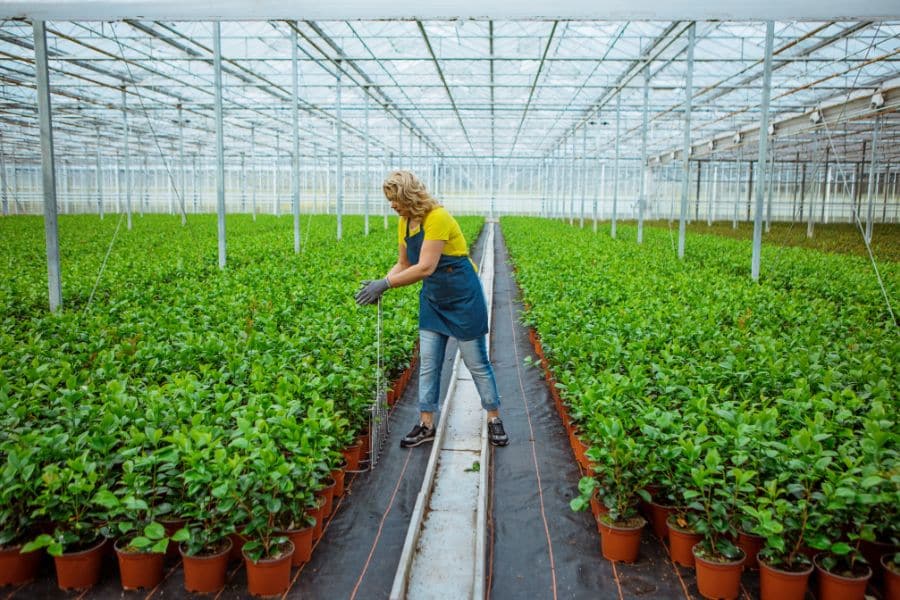
Summer conditions are ideal for many plant diseases. If not identified and controlled, pathogens can run rampant through your entire crop, decreasing plant quality and your profit.
Bacterial Diseases
Examples of bacterial diseases include bacterial leaf spot from Zanthomonas and Pseudomonas, bacterial blight, and soft rot from Erwinia and Pectobacterium as well as crown gall on woody ornamental plants.
To spot bacterial disease, look for water-soaked lesions, yellow halos around spots, leaf blight, stem cankers, and soft, collapsing tissue.
Root Diseases
Warm irrigation water and saturated growing media favor root pathogens, such as Pythium, Phytophthora, and Rhizoctonia. These pathogens affect the roots of plants throughout the production cycle.
Symptoms of root rot include wilting despite moist soil, poor nutrient uptake, brown roots, stunting, and collapse of the root system.
Powdery Mildew
Summer’s hot days and humid nights create the ideal conditions for powdery mildew to develop. Various species of the Erysiphaceae family of fungi are responsible for causing powdery mildew.
Look for white powdery growth, distorted leaves, reduced photosynthesis, and poor appearance when trying to diagnose powdery mildew in your plants.
Downy Mildew
Downy mildew is caused by microscopic, fungus-like water molds called oomycetes. They thrive in high humidity and moderate temperatures on plants that experience prolonged leaf wetness. Downy mildew can devastate crops before its symptoms become obvious.
To catch downy mildew early, look for yellow leaf spots, gray or purple growth on leaf undersides, and defoliation.
Best Practices for Summer Disease Prevention
Now that you understand your enemy, it’s time to discuss how you can prevent and treat these common summer production concerns. Implementing your integrated disease management program throughout the summer months is vitally important to protect your crops and your profit.
Here are a few tips for preventing disease in your crops this summer:
- Monitor frequently to spot symptoms early.
- Improve airflow with proper spacing and ventilation.
- Water early in the day to reduce leaf wetness.
- Remove infected plant material promptly.
- Sanitize tools, benches, propagation areas, and irrigation systems regularly with Phyton’s X3 product.
- Test irrigation water for microbial contamination.
- Manage algae and biofilm before they become established.
- Use preventative broad-spectrum systemic disease control products such as Phyton 27 and Phyton 35 to protect crops from propagation to transportation.
A proactive approach that combines sanitation, water quality management, environmental control, and preventative disease protection products can make the difference between a successful summer production season and significant losses. Phyton Corp’s fungicide and bactericide products as well as our sanitation solution can help you prevent disease and control disease at your operation this year.
For more information about Phyton’s disease control solutions, visit phytoncorp.com.
Summer Production FAQs
Why is summer considered a high-risk season for plant diseases in greenhouses and nurseries?
Warm temperatures, high humidity, frequent irrigation, and dense plant spacing create ideal conditions for bacteria and fungi to thrive. At the same time, heat stress can weaken plants, making them more susceptible to infection and allowing diseases to spread rapidly.
What are the most common diseases greenhouse growers encounter during the summer?
Summer disease pressure often includes bacterial leaf spot, powdery mildew, downy mildew, root diseases caused by Pythium and Phytophthora, and other waterborne pathogens. These diseases can affect foliage, flowers, stems, and roots, reducing plant quality and marketability.
How does irrigation contribute to disease spread?
Frequent watering can splash bacteria and fungal spores from plant to plant, while contaminated irrigation systems may distribute pathogens, algae, and biofilm throughout an entire greenhouse. Regular water testing and irrigation system sanitation help reduce the risk of waterborne disease outbreaks.What can growers do to reduce disease pressure during the summer?
An effective summer disease management program includes improving airflow, managing humidity, watering at the right time of day, removing infected plant material, sanitizing growing areas and irrigation systems, monitoring crops regularly, and using preventative disease control products to protect plants before infections become established.