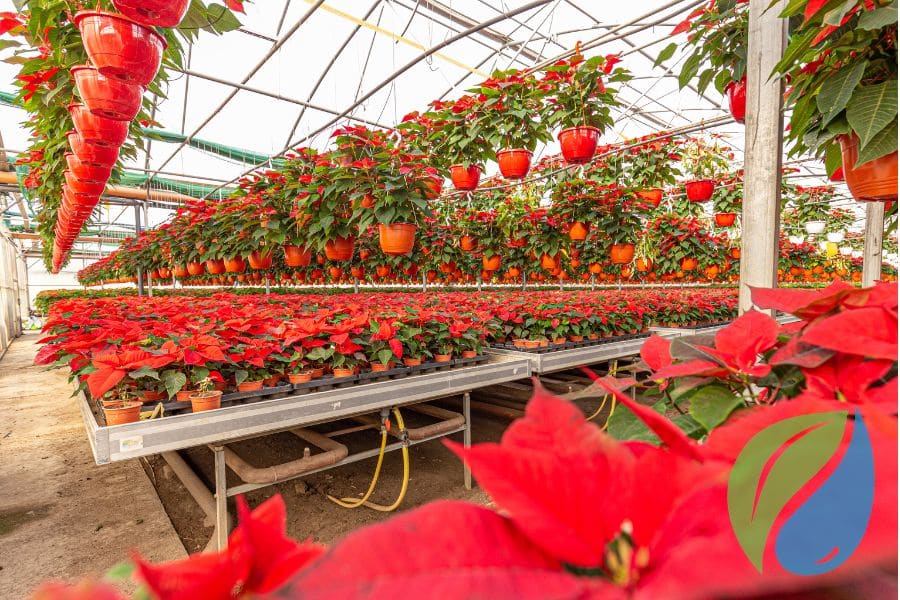
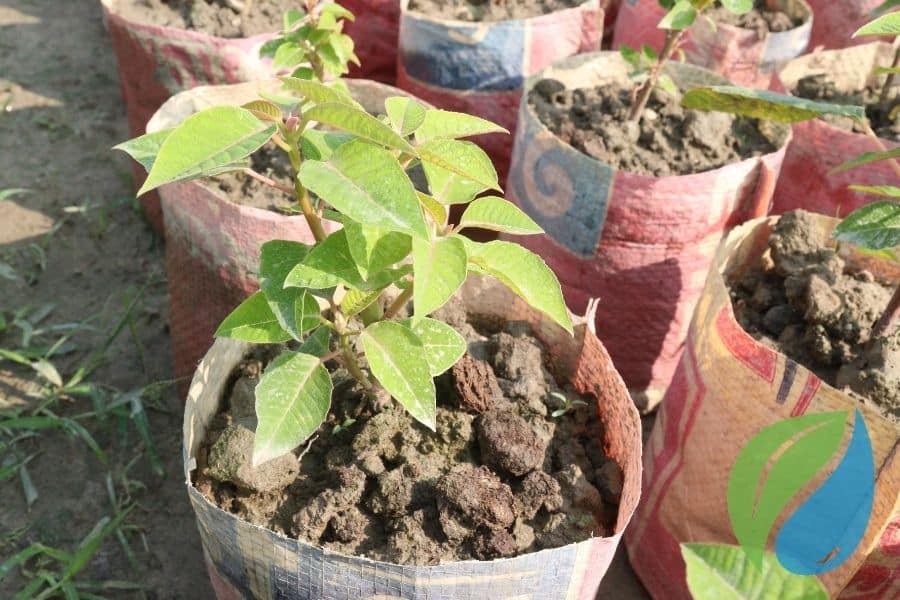
Hot, humid conditions can create an ideal environment for Erwinia and bacterial soft rot in greenhouse and nursery crops such as poinsettias, cyclamen, and calla lilies. Grower experiences shared in this post highlight how Phyton 27 has been incorporated into disease management programs to help control Erwinia and reduce crop losses.
Temperatures may be cooling off in the northern part of the country, but southern nurseries are still experiencing summer-like heat and humidity. These growing conditions are ideal for heat-loving pathogens like Erwinia to take hold in your greenhouse and wreak havoc on your poinsettia, cyclamen, and calla lily crops.
A broad-spectrum bactericide and fungicide like Phyton 27 can help you control Erwinia and treat infected plants. Let’s take a closer look at how growers like you use Phyton 27 to keep bacterial soft rot in check.
Erwinia Basics
Erwinia likes hot temperatures with plenty of moisture. Wounded or heat-stressed plants are prime targets for Erwinia infection. Add some rain or overhead irrigation, such as misting on cuttings during propagation, and you’ve got the perfect conditions for the bacteria to cause a slimy, smelly meltdown at your operation.
The Erwinia bacteria cause a foul-smelling rot of rhizomes, leaves, and flowers. Affected plants appear stunted with yellow foliage. The infection moves down into the rhizome, and the plant eventually collapses and dies. Rhizome infection starts as small, water-soaked lesions that grow rapidly, causing the rhizome to become rotted and mushy.
Controlling Bacteria Soft Rot in Poinsettias
Here’s how growers are using Phyton 27 to control Erwinia and bacterial soft rot at their operations, in their own words.
Nursery in Utah
“We fog the stock plants with Phyton 27 once a week. We used to have losses up to 20 percent, but since using Phyton 27, we have virtually no losses to Erwinia.”
Greenhouse in Michigan
“We use Phyton 27 on poinsettia cuttings to clean up Erwinia and prevent any spread. By using Phyton 27, we have very few problems.”
Controlling Erwinia in Cyclamen
A grower in Green Bay, Wisconsin, shared how their operation uses Phyton 27 to control Erwinia bacterial soft rot on their cyclamen crop.
“We apply Phyton 27 as a sprench, once a week, on cyclamen for crown rot. Cyclamen love it and won’t grow without it.”
Erwinia Soft Rot in Calla Lilly

Callas are very susceptible to soft rot. We recommend applying Phyton 27 preventively or when treatment begins before Erwinia is entrenched in the crop. Here’s what two growers had to say about their experience using Phyton 27 on calla lilies.
Greenhouse in Minnesota
“We used to see 30 to 40 percent of the crop infected by Erwinia. A pre-plant bulb dip of Phyton 27 has cut our infection to less than 5 percent. I wouldn’t be growing calla lily anymore if I didn’t have Phyotn 27.”
Nursery in California
“Before implementing Phyton 27 preplant bulb dip, we could only get 30 to 40 percent stand of potted ‘Millennium Gold,’ most would just die in the pot. Now, by dipping 5 minutes in a 3 oz./10 gal. solution, the ‘Millennium Gold’ stand is between 70 to 80 percent.”
Growers across the country have used Phyton 27 to control and prevent the spread of Erwinia in their poinsettia, cyclamen, and calla lily crops.
When used as directed, Phyton 27 is your best solution for safe, broad-spectrum bacterial and fungal disease control in a variety of nursery crops, including ornamentals. For more information about Phyton 27 and other greenhouse sanitation solutions, visit phytoncorp.com.
Bacterial Soft Rot FAQs
What conditions favor Erwinia bacterial soft rot?
Erwinia thrives in hot, moist conditions and can take advantage of wounded or heat-stressed plants. Rain, overhead irrigation, and misting during propagation can create additional opportunities for the bacteria to spread.
What are the symptoms of Erwinia bacterial soft rot?
Symptoms can include foul-smelling, watery or mushy rot affecting rhizomes, leaves, and flowers. Plants may become stunted and develop yellow foliage, while infected rhizomes can develop water-soaked lesions that rapidly expand and eventually cause plant collapse.
Which greenhouse and nursery crops are susceptible to Erwinia?
The blog highlights Erwinia problems in poinsettias, cyclamen, and calla lilies. Calla lilies are highly susceptible to bacterial soft rot.
How are growers using Phyton 27 to manage Erwinia?
The growers featured in the blog use Phyton 27 in several ways, including fogging stock plants, treating poinsettia cuttings, applying it as a sprench on cyclamen, and using pre-plant bulb dips on calla lilies. The specific application method and rate should follow the current product label.