Cercospora leaf spot is a common fungal disease that affects a wide range of ornamental and edible crops, particularly under warm, humid conditions and when infected plant debris or splashing water facilitates disease spread. Learn how to identify its characteristic purple-and-tan leaf spots and use sanitation, cultural controls, and broad-spectrum fungicides such as Phyton 27 and Phyton 35 to help prevent and manage the disease.
Leaf spot is a concern of greenhouse growers all year round. Cercospora leaf spot is very common in a variety of ornamental and edible crops. Fortunately, a broad-spectrum bactericide and fungicide can help you prevent and treat Cercospora and other troublesome pathogens.
What Is Cercospora Leaf Spot?
Cercospora leaf spot is a common plant disease caused by the Cercospora genus of fungi. It causes reduced yield and inferior crop quality. While Cercospora leaf spot affects many plant species, it is likely the most common leaf spot that appears on pansy in the South. It also affects roses, hydrangea, zinnia, and geranium as well as several edible crops, including beans, tomatoes, eggplants, peppers, cucurbits, spinach, and chard.
High humidity and warm temperatures are the ideal conditions for Cercospora to thrive. It can survive between growing seasons on plant debris, which can be a primary source of disease in subsequent crops. The fungi also spread by splashing water.
How to Spot Cercospora Leaf Spot
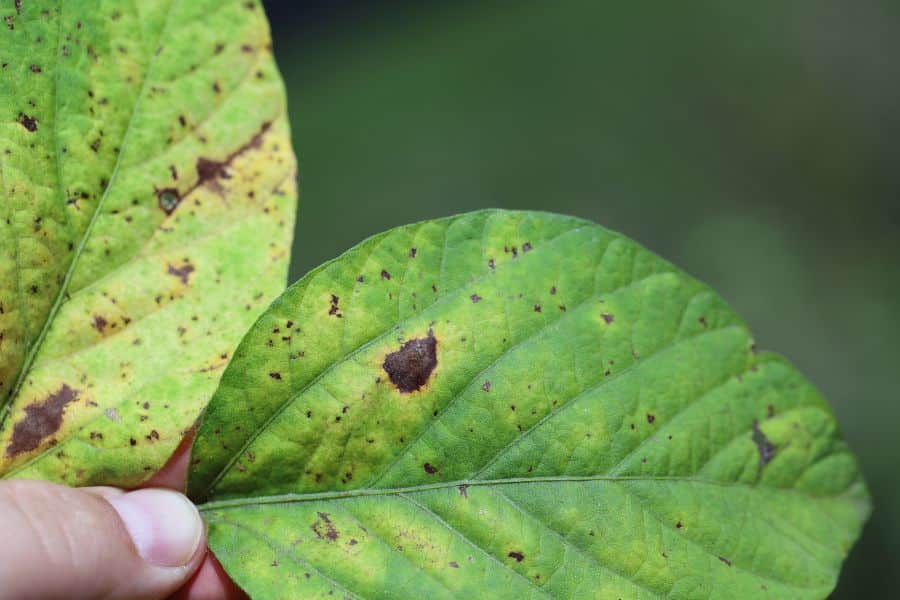
Leaf spot symptoms include spreading purple spots with feathered margins. They tend to appear first on older leaves or leaves that are close to the media surface. As the disease progresses, the leaf spots develop tan centers with purple borders. Lower leaves often turn yellow and fall off, reducing plant vigor and appearance.
Tips for Controlling Cercospora Leaf Spot
A broad-spectrum bactericide and fungicide like Phyton 27 (and its sister product Phyton 35 for edible crops) is your best line of defense against Cercospora leaf spot. Apply the product as a foliar spray at a rate of 1.5 to 2.0 fluid ounces per 10 gallons of water.
Maximize the benefit of Phyton 27 and Phyton 35 by practicing good cultural control. Remove infected leaves and rogue out severely infected plants to reduce disease spread. Water early in the day and avoid overhead watering when possible to keep leaves dry and reduce infection and spread.
Armed with the right defenses and proper sanitation practices, you can avoid the spread of Cercospora at your operation. Phyton’s bactericides and fungicides can treat and prevent this and other common greenhouse and nursery pathogens.
For more information about Phyton 27, Phyton 35, and other greenhouse sanitation solutions, visit phytoncorp.com.
Cercospora Leaf Spot FAQs
What crops are commonly affected by Cercospora leaf spot?
Cercospora affects many ornamental and edible crops, including pansy, roses, hydrangea, zinnia, geranium, beans, tomatoes, eggplants, peppers, cucurbits, spinach, and chard.
What conditions favor the development and spread of Cercospora leaf spot?
Warm temperatures and high humidity favor Cercospora development. The pathogen can survive between growing seasons on plant debris and spread between plants through splashing water.
What are the symptoms of Cercospora leaf spot?
Symptoms typically begin as spreading purple spots with feathered margins, often on older leaves or leaves near the media surface. As the disease progresses, spots develop tan centers surrounded by purple borders, while lower leaves may yellow and drop prematurely.
How can growers manage Cercospora leaf spot in the greenhouse?
Growers can combine cultural controls with fungicide applications. Removing infected leaves and severely affected plants, watering early in the day, avoiding overhead irrigation when possible, and applying Phyton 27 or Phyton 35 as a foliar spray can help manage Cercospora leaf spot and reduce disease spread.