Keeping poinsettias healthy through the holiday season requires a preventative disease-control program that addresses root, stem, and foliar diseases from October through shipment in December. This guide outlines when to apply Phyton 27 and highlights key environmental management practices and symptoms of common poinsettia diseases, including Botrytis, Phytophthora, powdery mildew, Rhizoctonia, and scab.
How do you keep a perfect poinsettia crop perfect? How do you turn around a crop that is less than perfect? With broad-spectrum disease control applied from propagation to shipment, of course.
Phyton 27 delivers disease control and prevention with excellent plant safety and no residue to keep your crop flawless for a fantastic finish. Here’s a convenient calendar to help you time your disease control applications optimally.
October: Begin Preventative Treatments
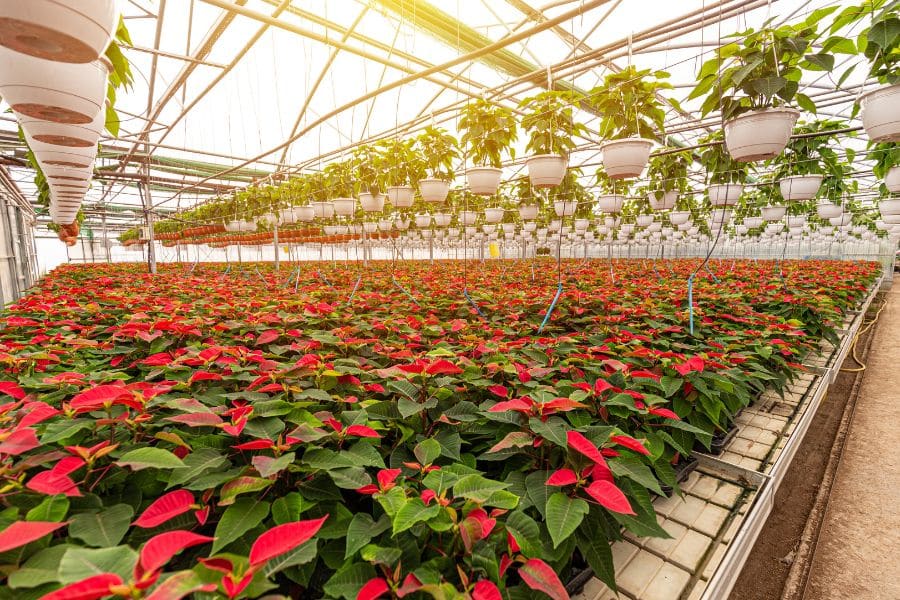
Poinsettia plants remain active throughout October. This is the time to begin preventative treatments for root, stem, and foliar diseases. Preventative treatments are critical if you have had problems with powdery mildew, scab, Phytophthora crown, stem rot, or root rot. They are also required if growing conditions are favorable for disease development.
November: Continue Preventative Treatments
Weather conditions tend to deteriorate toward the end of the poinsettia crop, when plants tend to be crowded and more susceptible to powdery mildew, Botrytis, Pythium, and Rhizoctonia. Pay close attention to irrigation practices, airflow, and humidity management to make the growing environment more conducive to healthy plants and less attractive to fungi. Maintain a preventative spray program if your growing operation has a history of disease problems or if the weather is ripe for disease outbreaks.
December: Protect for Harvest & Shipment
December is the time to package, ship, and sell. Before you breathe a sigh of relief, however, make a final Phyton 27 application before plants are cooled, sleeved, boxed and shipped. This will keep them clear of any latent Botrytis and powdery mildew.
Poinsettia Problem Primer
Need a review of the common poinsettia diseases? We get into it on our blog. Here’s a convenient chart for your review.
| Disease | Symptoms |
| Botrytis | Brown spots; fluffy, gray mycelium on leaves, bracts, and stems; play close attention to senescing or damaged tissue |
| Phytophthora | Gray stem lesions near soil line; black streaks on stem |
| Powdery mildew | White, fluffy fungal patches on leaves and bracts; spots most obvious on red and pinks, but white varieties just as susceptible |
| Rhizoctonia | Stem cankers near soil line; wilting, yellow lower leaves |
| Scab | Scabby, raised spots on stems and leaves; abnormally long branches |
The holiday growing season is here. Protect your crops and your profits with broad-spectrum disease control. Find your local Phyton 27 distributor at phytoncorp.com.
Achieving Poinsettia Perfection FAQs
When should growers begin preventative disease treatments on poinsettias?
Preventative treatments should begin in October, when poinsettias remain actively growing and conditions may favor root, stem, and foliar diseases. Preventative treatments are particularly important when an operation has a history of powdery mildew, scab, Phytophthora crown and stem rot, or root rot.
What conditions can increase disease pressure in poinsettia crops?
As the crop matures, crowded plants, declining weather conditions, high humidity, poor airflow, and unfavorable irrigation practices can increase susceptibility to diseases such as powdery mildew, Botrytis, Pythium, and Rhizoctonia.
Why should growers continue disease prevention into December?
December brings cooling, sleeving, boxing, shipping, and sales, so the crop still needs protection. We recommend a final Phyton 27 application before cooling and shipment to help keep plants clear of latent Botrytis and powdery mildew.
What are the symptoms of common poinsettia diseases?
Botrytis produces brown spots and fluffy gray mycelium; Phytophthora causes gray stem lesions and black streaks near the soil line; powdery mildew produces white, fluffy patches on leaves and bracts; Rhizoctonia causes stem cankers, wilting, and yellow lower leaves; and scab produces raised, scabby spots and abnormally long branches.