Disease control for ornamental trees and shrubs must provide long-term, proactive disease management across the entire production cycle. Broad-spectrum systemic solutions like Phyton 27 and Phyton 35 protect plants from the inside out, helping growers maintain healthy, high-quality crops from propagation through finishing.
From Japanese maples and hydrangeas to boxwoods, dogwoods, and flowering shrubs, ornamental trees and shrubs are valued for their structure, foliage, blooms, and long-term landscape appeal. They also represent a significant investment of your time and nursery resources.
Production of ornamental trees and shrubs can take months to years. During this time, your plants are exposed to a wide range of environmental stresses as well as bacterial and fungal pathogens. Broad-spectrum, systemic disease control products like Phyton 27 protect your crop from propagation and container production to finishing.
Challenges of Disease Control for Ornamental Trees and Shrubs
Unlike fast-turning annuals, trees and shrubs remain in production months or even years. During that time, they experience a number of stressors, including seasonal temperature changes, repeated pruning and handling, transplanting, and variable irrigation conditions.
Each of these stressors present an opportunity for diseases to enter and spread. Bacterial diseases, root rots, vascular diseases, Botrytis blight, and fungal leaf diseases can all plague young ornamental trees and shrubs if they are not treated properly.
Broad-Spectrum Disease Control for Woody Plants
Broad-spectrum, systemic disease control protects plants against a wide range of bacterial and fungal pathogens. Because they target multiple diseases at once, these products can simplify your disease management program while offering your plants more consistent protection.
Trees and shrubs absorb systemic bactericides and fungicides such as Phyton 27 (or Phyton 35 for edible fruit and nut trees) into their vascular systems, where it then moves throughout the plant through the natural process of translocation, controlling pathogens already inside the plant as well as protecting new growth.
This delivery method is advantageous for woody plants, as dense canopies can limit foliar spray coverage. Bark and branching structures create hidden infection sites. Using a systemic product ensures you don’t overlook any evidence of disease.
Broad-Spectrum Disease Control Addresses Common Nursery Challenges
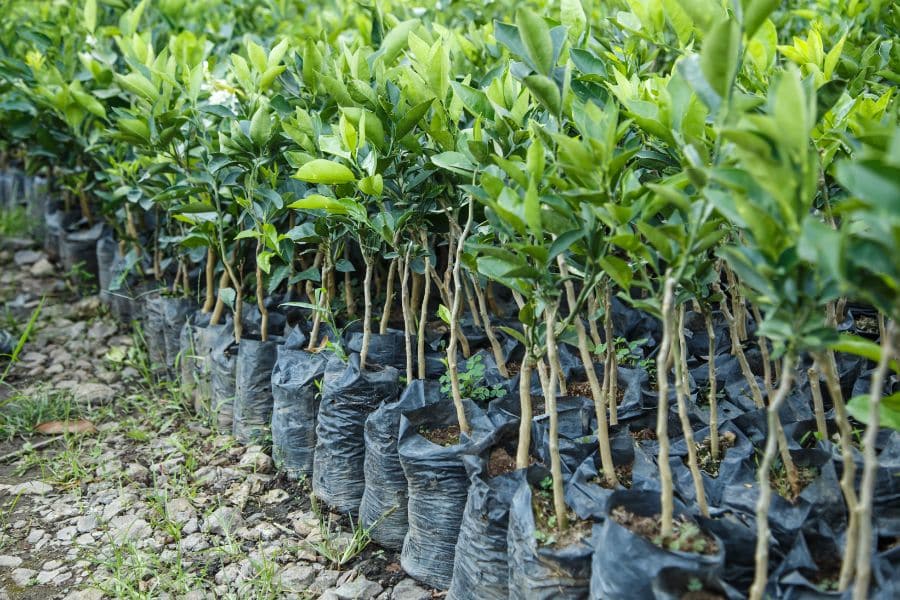
Broad-spectrum systemics address three common challenges of growing ornamental trees and shrubs in nursery settings.
1. Close Proximity
In container nurseries, trees and shrubs are tightly spaced to maximize production. In these conditions, leaf-to-leaf contact, limited airflow, and increased humidity all create conditions for disease to thrive and spread rapidly. Systemic bactericides and fungicides protect individual plants from the inside out, reducing the disease pressure from being in close proximity to one another.
2. Irrigation Systems
If left untreated, overhead irrigation and recycled water systems distribute bacteria, fungal spores, and waterborne pathogens to your plants, not just water. Broad-spectrum systemics protect against these waterborne diseases. You can also prevent pathogens from colonizing your irrigation lines with a plant-safe disinfectant like Phyton X3.
3. Long Production Cycles
The longer its production cycle, the greater the chances are that a plant will be exposed to bacterial or fungal disease at your nursery. Environmental stress, seasonal disease pressure, and mechanical injury from pruning, spacing, and shipping can all provide an opportunity for disease to spread. Systemics provide long-lasting protection, up to 21 days per application, which reduces your reapplication rates and maintains your plant health over time.
From young liners to finished, landscape-ready plants, disease prevention must be continuous. Broad-spectrum systemic products like Phyton 27 and Phyton 35 keep your plants disease-free, visually appealing, and ready to thrive in the landscape.
Ornamental trees and shrubs are long-term investments for growers and customers alike. Give your plants the best chance at survival and protect your profit with proven disease control solutions. Get in touch with the experts at Phyton to discuss your options or place an order through our distributors or our online store.
Disease Control for Ornamental Trees FAQs
Why is disease control more challenging for ornamental trees and shrubs?
Because trees and shrubs are grown over months or years, they are exposed to ongoing stressors like pruning, transplanting, and environmental changes that increase the risk of disease infection and spread.
How do systemic disease control products work in woody plants?
Systemic products are absorbed into the plant’s vascular system and move throughout the plant, controlling internal pathogens and protecting new growth that may not be reached by surface sprays.
What nursery conditions increase disease pressure in ornamental crops?
Close plant spacing, overhead irrigation, recycled water systems, and long production cycles all contribute to higher disease risk in nursery environments.
How can growers improve disease control in ornamental trees and shrubs?
By combining sanitation, proper irrigation and airflow management, and preventative applications of broad-spectrum systemic products like Phyton 27 or Phyton 35, along with disinfectants like X3 for irrigation systems.