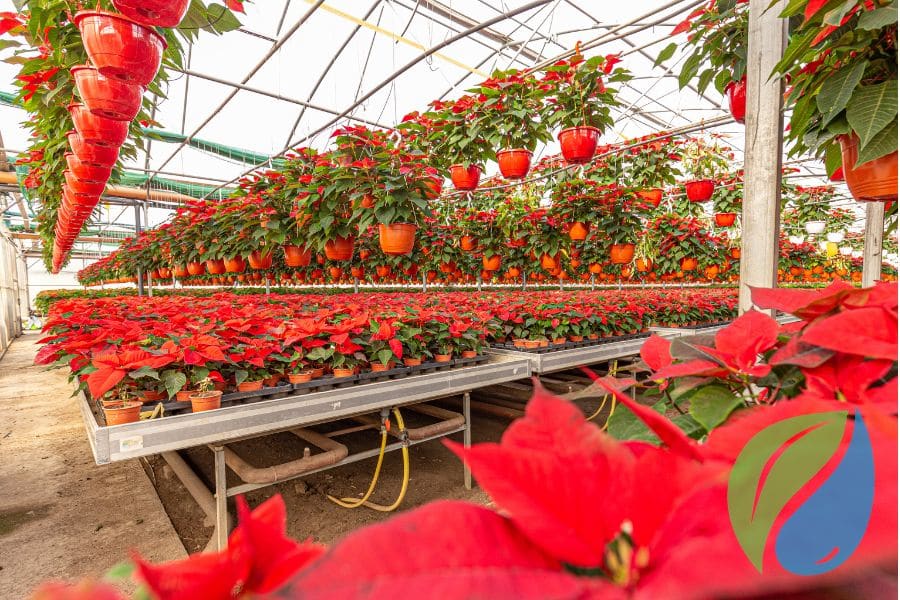
Holiday ornamentals such as Christmas cactus, chrysanthemum, cyclamen, kalanchoe, and miniature roses are susceptible to Botrytis, downy mildew, and powdery mildew, which can thrive under humid conditions and reduce crop quality and marketability. Learn how proper ventilation, sanitation, and Phyton 27’s broad-spectrum systemic disease protection can help growers manage these pathogens and protect ornamental crops from propagation through shipment.
Poinsettias aren’t the only ornamental associated with the holidays. Christmas cactus, chrysanthemum, cyclamen, kalanchoe, and miniature roses all make popular holiday décor and hostess gifts throughout the season.
These beautiful yet delicate blooms are susceptible to several holiday disease hazards that lie in wait to attack your crops and steal your profits. Protecting them requires broad-spectrum disease control that is tough on pathogens, gentle on plants, and leaves no residue behind to turn off consumers. Phyton 27 fits the bill. Let’s take a look at the top three holiday hazards for your ornamental crops and how Phyton 27 can protect them from propagation to shipment.
Top Holiday Hazards for Holiday Ornamentals
Botrytis, downy mildew, and powdery mildew are the top three hazards for holiday ornamentals. Here is a look at the conditions that cause the pathogens to thrive, what to look for, and how to treat them.
| Hazard | Conditions | Symptoms | Treatment |
| Botrytis | High humidity Cool to moderate temperatures Poor air circulation | Brown spots Fluffy, gray mycelium on foliage & flowers | Broad-spectrum bactericide/fungicide Environmental changes Good sanitation |
| Downy Mildew | High humidity Cool temperatures Free water on leaves | Pale green-to-yellow spots on upper side of leaves White-to-gray patches of spores on the underside of leaves | Broad-spectrum bactericide/fungicide Minimize leaf wetness |
| Powdery Mildew | High humidity Moderate temperatures Poor air circulation | Fluffy, white patches of mycelium on foliage | Broad-spectrum bactericide/fungicide Environmental changes Good sanitation |
As you can see, these pathogens all thrive in cool to moderate temperatures and high humidity. Maintaining proper ventilation and practicing good sanitation and plant hygiene can help you avoid creating the ideal conditions for these hazards to gain a foothold. We also recommend a broad-spectrum bactericide and fungicide like Phyton 27 to prevent disease and control disease if it does arise.
Avoid Holiday Hazards with Phyton 27

Phyton 27 is a versatile, broad-spectrum bactericide and fungicide that is safe for use on holiday ornamentals, from Christmas cacti to chrysanthemums. It provides broad-spectrum disease protection for up to 21 days when used as directed. Unlike contact fungicides that remain on the plant surface, Phyton 27 is absorbed into the vascular system and redistributed through the plant’s natural process of translocation. This allows Phyton 27 to protect new growth and internal plant tissues foliar sprays struggle to reach. Phyton 27 can be applied as a spray, soil drench, fog, dip, injection, or chemigation depending on the growing stage your crops are in.
The holiday retail season is here. Protect your crops and your profits with broad-spectrum disease control. Find your local Phyton 27 distributor at phytoncorp.com.
Holiday Ornamentals FAQs
What are the most common disease threats to holiday ornamental crops?
Botrytis, downy mildew, and powdery mildew are the three primary threats to holiday ornamentals. These diseases can affect foliage and flowers, compromising plant health, appearance, and marketability.
How can growers distinguish between Botrytis, downy mildew, and powdery mildew?
Botrytis typically causes brown spots and fluffy gray mycelium on foliage and flowers. Downy mildew produces pale green-to-yellow spots on the upper leaf surface and white-to-gray patches of spores on the underside, while powdery mildew appears as fluffy white patches on foliage.
What environmental conditions favor these diseases?
High humidity contributes to all three diseases. Botrytis and powdery mildew are associated with poor air circulation and cool-to-moderate or moderate temperatures, while downy mildew is favored by cool temperatures and free water on leaves.
How does Phyton 27 help protect holiday ornamentals?
Phyton 27 is a broad-spectrum bactericide and fungicide that is absorbed into the plant’s vascular system and redistributed through natural translocation. According to the article, it can provide up to 21 days of disease protection when used as directed and can be applied by several methods, including foliar spray, soil drench, fog, dip, injection, or chemigation, depending on the crop stage and label directions.