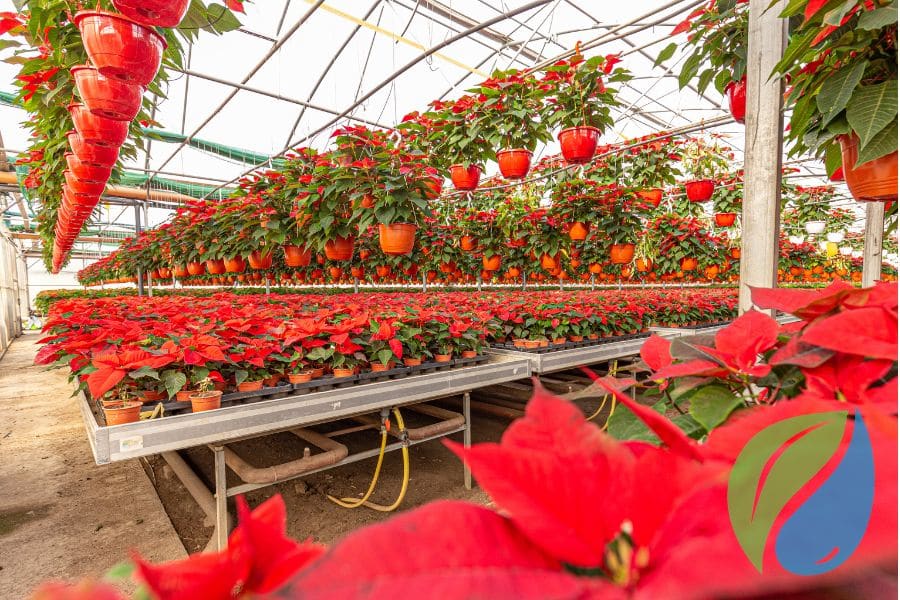
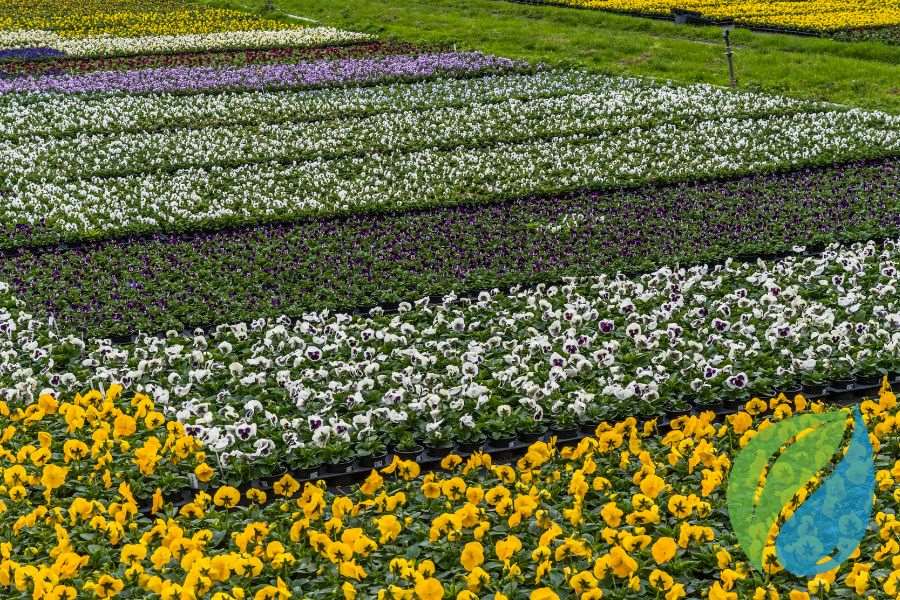
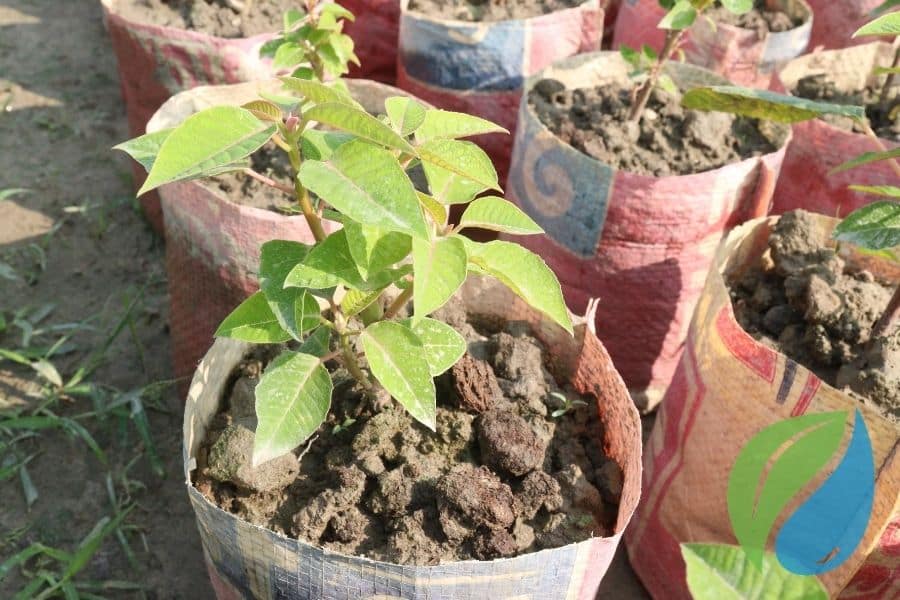
Poinsettia growers face several fungal diseases throughout production, including powdery mildew, Botrytis, and Rhizoctonia, which can quickly reduce crop quality and marketability. Learn how to identify these diseases and use Phyton 27’s contact and systemic activity, along with targeted foliar sprays, preventative drenches, and good crop management practices, to protect poinsettias through production and post-harvest handling.
The perfect poinsettia crop is the ultimate goal of growers. But as you know, the road to perfection is littered with fungal land mines, including powdery mildew, Botrytis, and Rhizoctonia. Phyton 27 doubles your protection with contact activity to shield your healthy plants, plus systemic activity to seek out and destroy active infections and keep them from exploding into crop-threatening epidemics.
Let’s dig into these poinsettia threats and how you can achieve poinsettia perfection this growing season.
How to Spot Common Poinsettia Diseases
Here is a look at the most common poinsettia diseases and how to identify them in your crops.
Powdery Mildew
Powdery mildew outbreaks typically occur on leaves and bracts from late October to the end of the crop. Bract tissue is particularly susceptible, with powdery mildew spreading rapidly and making plants unsaleable.
This disease is easy to diagnose with its characteristic fluffy white spots on the bracts and foliage. It is most obvious on red and pink poinsettias due to the color contrast. White varieties are just as susceptible to powdery mildew, so watch the white varieties closely for hard-to-spot infections.
Botrytis
Leaf blight and bract blight caused by Botrytis are common diseases in poinsettia production. The disease usually starts at the margin of the leaf or bract and then moves quickly throughout the leaf, down the petiole, and in some cases, into the stem. Watch for fluffy, gray mycelium on leaves, bracts, or stems. Pay close attention to senescing or damaged tissue.
Rhizoctonia
Rhizoctonia root rot tends to start at the base of the stem. It causes brown, sunken lesions on the stem at the soil line.
What to Do About Common Poinsettia Diseases
Once you’ve identified what you’re up against, it’s time to employ an effective defense. Phyton 27 provides dependable control of powdery mildew, Botrytis, and Rhizoctonia. It’s safe to use on transitional and fully colored bracts.
For powdery mildew and Botrytis, apply Phyton 27 as a foliar spray, lightly yet thoroughly covering the underside of leaves. For Rhizoctonia, apply a drench to the growing media. Root rots are easier to prevent than control, so preventive drenches are the best plan of attack. Once root rot is active, remove and dispose of infected plants and treat the remaining crop with a preventative drench.
Post-Harvest Protection with No Residue
A major benefit of using a broad-spectrum bactericide and fungicide like Phyton 27 is its post-harvest protection. Phyton 27 is clean and safe to apply throughout the poinsettia crop, with no residue or damage, even on full-colored bracts.
An application of Phyton 27 prior to cooling, boxing, sleeving, shipping, and sale ensures a clean, top-quality poinsettia for your customers.
Proof of Poinsettia Perfection
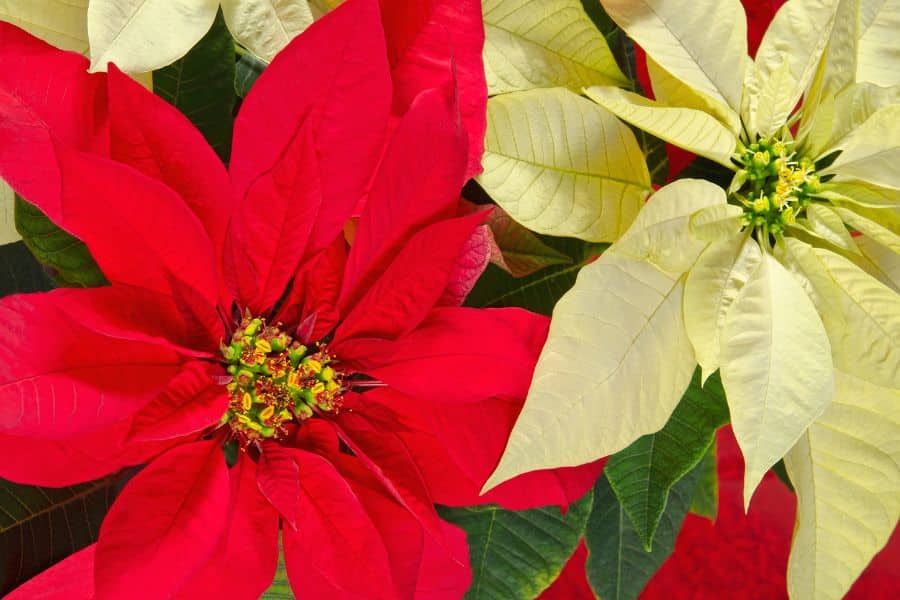
Growers across the United States use Phyton 27 to perfect their poinsettia crop.
“Phyton 27 worked great for powdery mildew on poinsettias. I was amazed at how fast it cleared up the mildew, and there was no damage to the plants!” North Carolina Grower
“Phyton 27 is the best thing for Botrytis on cyclamen and poinsettias, and the fact that you can use it without phytotoxicity is a bonus!” California Grower
“We use Phyton 27 for full-season protection on the poinsettia crop, from propagation for Erwinia control to full-bract color for Botrytis control.” Illinois Grower
“Phyton 27 did a beautiful job controlling scab on poinsettias . . . It completely took care of the scab.” Washington Grower
Ready for a successful growing season of poinsettia perfection? Find your local Phyton 27 distributor at phytoncorp.com.
Achieving Poinsettia Perfection FAQs
What are the most common fungal diseases affecting poinsettias?
Common poinsettia diseases include powdery mildew, Botrytis leaf and bract blight, and Rhizoctonia root rot. Each disease produces different symptoms and may require a different application approach.
How can growers identify powdery mildew and Botrytis on poinsettias?
Powdery mildew produces characteristic fluffy white growth on leaves and bracts, while Botrytis typically begins at the margins of leaves or bracts and can spread into the petiole and stem. Gray, fluffy mycelium on damaged or senescing tissue is a key indicator of Botrytis.
How should Phyton 27 be applied for poinsettia diseases?
For powdery mildew and Botrytis, we recommend applying Phyton 27 as a foliar spray with thorough coverage, including the undersides of leaves. For Rhizoctonia, apply Phyton 27 as a growing-media drench, with preventative applications emphasized because established root rot is more difficult to control.
Can Phyton 27 be used on poinsettias with fully colored bracts?
Phyton 27 can be used throughout the poinsettia crop, including on transitional and fully colored bracts. Apply before cooling, boxing, sleeving, shipping, and sale as a way to provide post-harvest protection without visible residue or damage.